Mastering Cup Engraving with SVG: A Comprehensive Guide for Designers and Creators
Cup engraving has evolved significantly over the years, transitioning from traditional methods to digital solutions that offer precision, flexibility, and scalability. One of the most powerful tools in this modern workflow is Cup Engraving Svg, which enables designers to create intricate designs that can be directly applied to cups using laser engraving technology. This guide explores how SVG files, along with complementary formats like PNG, DXF, JPG, and EPS, play a critical role in the cup engraving process.
The Role of SVG in Digital Engraving
Cup Engraving Svg is more than just a file type—it’s a gateway to creative freedom. Scalable Vector Graphics (SVG) files are ideal for engraving because they maintain clarity at any size, ensuring that even the smallest details remain sharp. Unlike raster images such as JPEGs or PNGs, SVGs are based on mathematical equations, making them infinitely scalable without loss of quality.
This is especially important when designing cup engravings, where intricate patterns, logos, or text need to be rendered precisely. Whether you're creating a custom logo for a business or personalizing a gift, the ability to scale your design without distortion is a game-changer. With Cup Engraving Svg, you can design with confidence, knowing your final output will look perfect on any cup size.
Why SVG Files Are Ideal for Engraving
- Resolution Independence: SVGs do not degrade in quality when scaled up or down, making them perfect for high-resolution engraving.
- Transparency Support: Many SVG files come with transparent backgrounds, allowing for seamless integration with different cup materials and colors.
- Editing Flexibility: SVG files can be easily modified using vector graphic software like Adobe Illustrator or Inkscape, enabling quick adjustments before engraving.
- Compatibility with Laser Engravers: Most modern laser engraving machines support SVG format, making it a versatile choice for both hobbyists and professionals.
Complementary File Formats for Enhanced Workflow
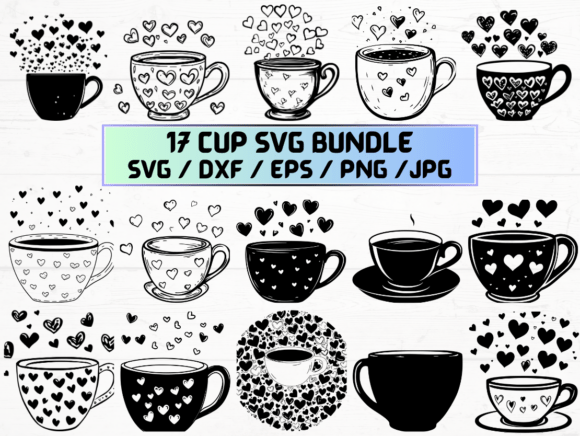
While SVG is the primary format for Cup Engraving Svg, it's often paired with other file types to ensure compatibility across different platforms and applications. The ZIP folder provided includes 17 SVG files, alongside 17 PNG, JPG, DXF, and EPS files—each serving a unique purpose in the design and engraving process.
PNG Files are great for web-based previews and print purposes due to their support for transparency and high-quality rendering. JPG Files are useful for sharing designs quickly, although they may lose some detail when scaled. DXF Files are commonly used in CAD software, offering precise control over geometric shapes and dimensions. EPS Files are ideal for print production, ensuring consistent quality across different printing environments.
By including multiple file formats, the Cup Engraving Svg package caters to a wide range of users, from those who prefer digital editing to those who rely on traditional print workflows. This versatility ensures that no matter the project's scope or medium, the right file type is always available.
Practical Use Cases for Cup Engraving Files
The applications of Cup Engraving Svg extend beyond simple customization. Here are a few real-world examples:
- Business Branding: Companies often use engraved cups as promotional items. With Cup Engraving Svg, businesses can create custom logos and slogans that align with their brand identity.
- Event Customization: Event planners can personalize cups with event names, dates, or sponsor logos using SVG files, enhancing the overall experience for attendees.
- Personalized Gifts: Individuals can create unique gifts by engraving meaningful messages, names, or special symbols onto cups, adding a personal touch to everyday items.
- Educational Tools: Teachers and educators can use engraved cups as teaching aids, incorporating diagrams, formulas, or historical facts into the design.
- Artistic Expression: Artists and designers can experiment with abstract patterns, typography, and mixed media through SVG-based engraving, pushing the boundaries of traditional craft.
Considerations for Using Cup Engraving Svg
While Cup Engraving Svg offers numerous benefits, there are several factors to consider before diving into the design process:
- File Complexity: Highly detailed SVG files can sometimes cause issues with laser engraving machines. It's important to simplify complex designs to ensure smooth operation.
- Material Compatibility: Not all materials respond equally well to engraving. Testing different materials with your design can help identify the best results.
- Engraver Settings: Adjusting settings such as power, speed, and focus can greatly impact the final outcome. Experimentation is key to achieving the desired effect.
- Software Requirements: Some engraving machines require specific software to open and process SVG files. Ensure your design is compatible with the software you're using.
- Print Quality: While SVGs are resolution-independent, the final print quality depends on the engraving machine and material used. Always review your design before engraving.
Optimizing Your Workflow with Multiple File Types
Working with multiple file types can streamline your workflow and improve efficiency. For example, using SVG files for design and PNG files for previewing allows you to see how your design will look before committing to engraving. Similarly, exporting to DXF or EPS can help with compatibility with CAD software or print shops that require specific formats.
By organizing your files effectively and understanding the strengths of each format, you can create a more efficient and productive workflow. This is particularly valuable for professionals who handle multiple projects or collaborate with others who may use different software tools.
Conclusion
Cup Engraving Svg represents a powerful intersection of design and technology, offering endless possibilities for creativity and customization. Whether you're a professional designer, a hobbyist, or a small business owner, the inclusion of multiple file formats ensures that you have the flexibility to meet your project's needs. By leveraging the strengths of SVG, PNG, JPG, DXF, and EPS files, you can achieve high-quality results that are both visually appealing and functionally effective.